 how-to
How to Lower Monthly AC Bills in Florida: 7 Proven Steps
Table of Contents
- Start With a Home Energy Audit Before You Change Anything
- Best Thermostat Settings for Florida Summers to Lower AC Bills
- How Often to Change Your AC Filter in Florida
- Air Conditioner Maintenance to Lower Electric Bills
- How to Reduce Humidity in a Florida Home Without Overcooling
- When Repairing Your AC Costs More Than Replacing It
- Free and Low-Cost Habits That Cut Cooling Costs
- Frequently Asked Questions
Last Updated: October 16, 2026
Start With a Home Energy Audit Before You Change Anything
Learning how to lower monthly AC bills in Florida starts with one step most homeowners skip: a home energy audit. This guide from Morgan Home Services walks through seven proven steps we use with homeowners in Bushnell and across Central Florida, where summer heat pushes cooling systems to work harder than almost anywhere else in the country.
An energy audit is a top-to-bottom check of where your home loses cool air and wastes power. It covers insulation, duct leaks, window seals, and how your AC actually runs. Many Florida utilities offer free or low-cost audits, and you can also ask an HVAC company to check your system during a routine visit.
Why does the audit come first? Because guessing wastes money. You might buy a new thermostat when the real problem is a leaky duct in the attic.
Here's what a basic audit looks for:
- Air leaks around doors, windows, and attic hatches
- Ductwork gaps that push cool air into the attic
- Insulation levels in walls and ceilings
- How long your AC runs in a single cycle
- Thermostat placement and settings
Fix the cheap stuff first. Sealing gaps and patching ducts often costs far less than new equipment, and the payoff shows up on your very next bill.
Best Thermostat Settings for Florida Summers to Lower AC Bills
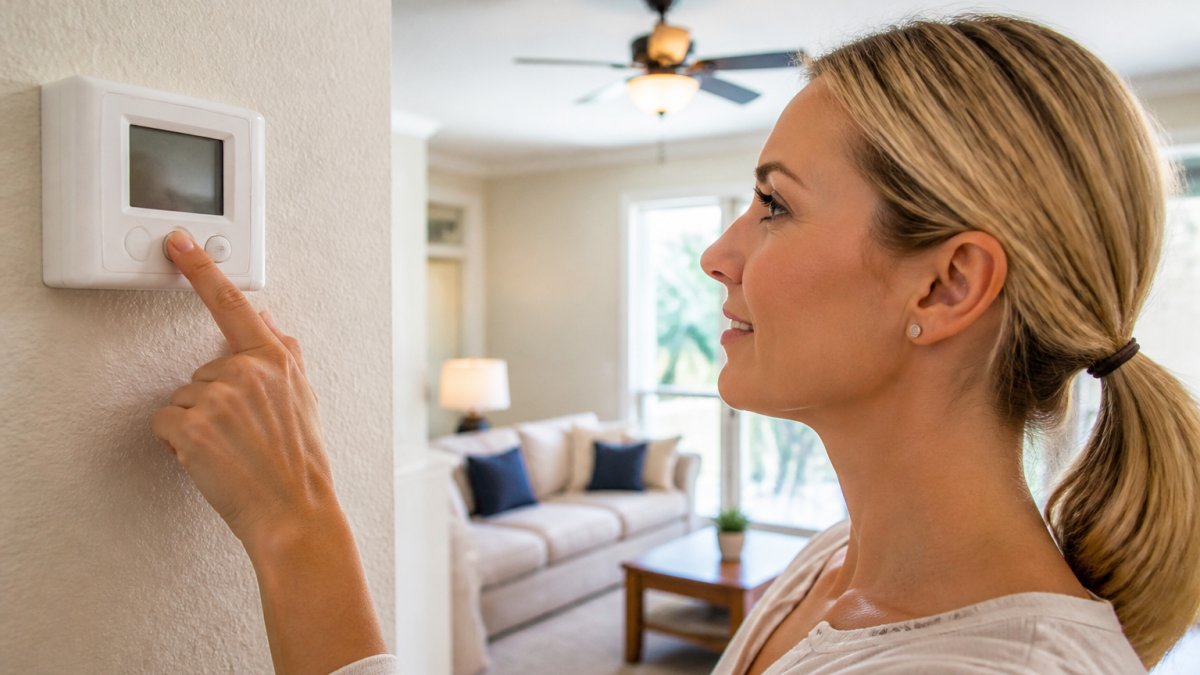
The best thermostat setting for a Florida summer is 78°F while you're home and 82-85°F when you're away. Every degree you raise the setting above 72°F can trim a noticeable slice off your cooling costs, because your system simply runs less.
The trick is consistency. In Florida's humidity, letting the house heat up too far means your AC has to run a long time to catch up, and that can cost more than holding a steady temperature.
When to Raise the Temperature and When to Leave It Alone
Raise the setting when you leave for work, run errands, or head out for the weekend. Leave it alone during the hottest part of the day if someone is home, because a big temperature swing forces the system into a long, expensive recovery.
A programmable or smart thermostat handles this for you. Set a schedule once, and it adjusts on its own.
Quick rules that work in our climate:
- Home and awake: 78°F
- Asleep: 80°F
- Away for the day: 82-85°F
- Never drop below 72°F, it wastes power and can freeze the coil
How Often to Change Your AC Filter in Florida
Change your AC filter every 30 to 60 days in Florida, and every 30 days during peak summer. A clogged filter chokes airflow, which makes your system run longer to cool the same space.
This is the cheapest habit on this list, and it's the one homeowners skip most. A dirty filter also hurts air quality and can lead to a frozen coil or a failed blower motor.
Filter timing depends on your home:
- No pets, no allergies: every 60 days
- Pets or allergy sufferers: every 30 days
- New construction or dusty remodeling: every 2-3 weeks
- Vacation home that sits empty: check monthly, change as needed
Write the change date on the filter frame with a marker. You'll never guess again.
Air Conditioner Maintenance to Lower Electric Bills
Air conditioner maintenance to lower electric bills comes down to one idea: a clean, tuned system uses less power to do the same job. A dirty condenser coil or low refrigerant charge forces the unit to run longer and harder.
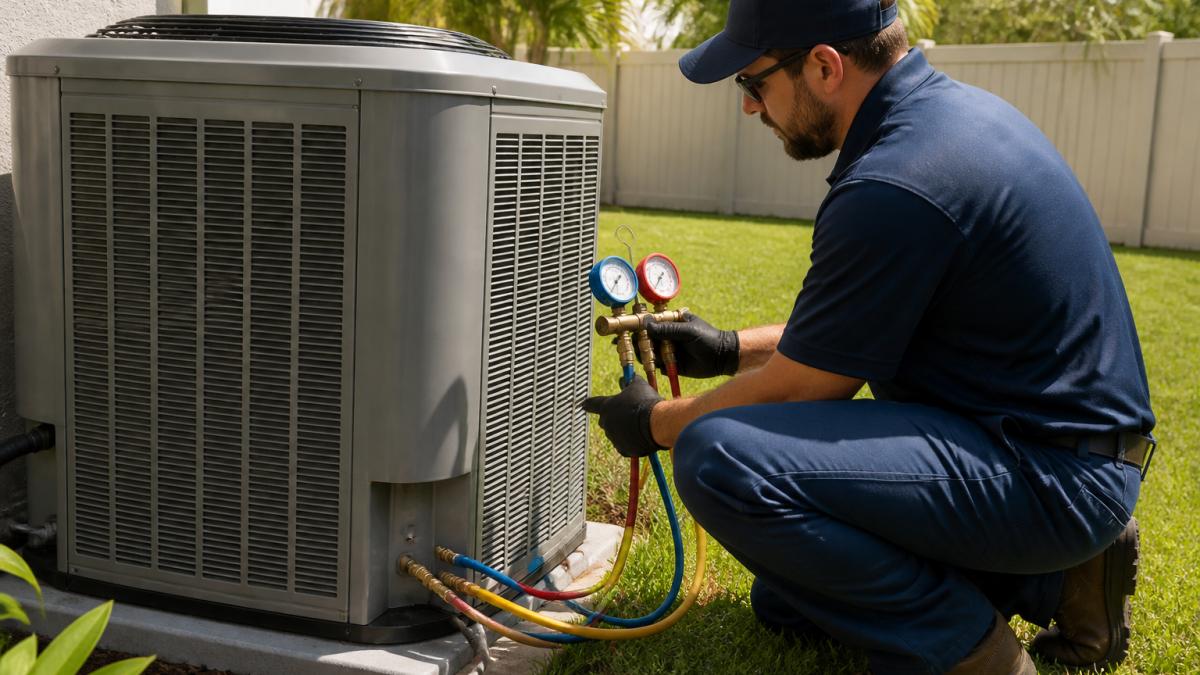
Most of the work happens outside. The condenser unit needs clear airflow, so keep grass, leaves, and shrubs at least two feet away from it. Rinse the coils with a garden hose each spring.
Inside, the drain line needs to stay clear. A clogged drain can trip a safety switch and shut the system down in the middle of July.
Your own monthly checklist:
- Replace or rinse the filter
- Clear debris from around the outdoor unit
- Check the condensate drain pan for standing water
- Look for frost on the indoor coil
- Listen for new rattles or squeals
What a Professional Tune-Up Actually Checks
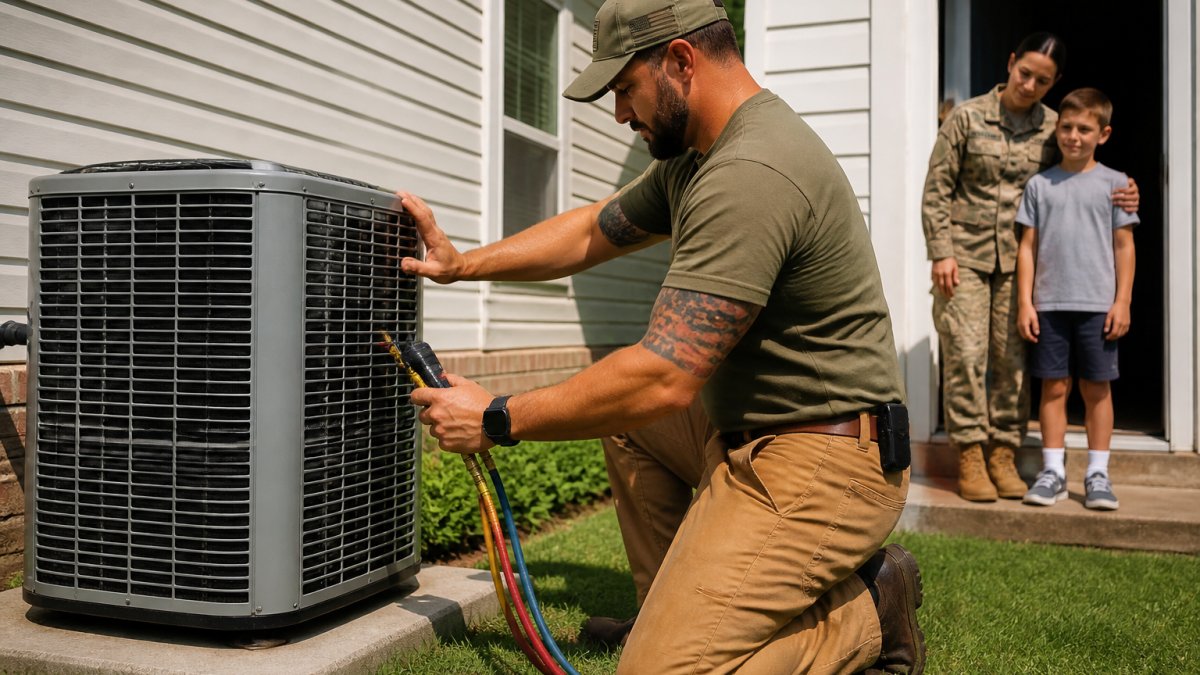
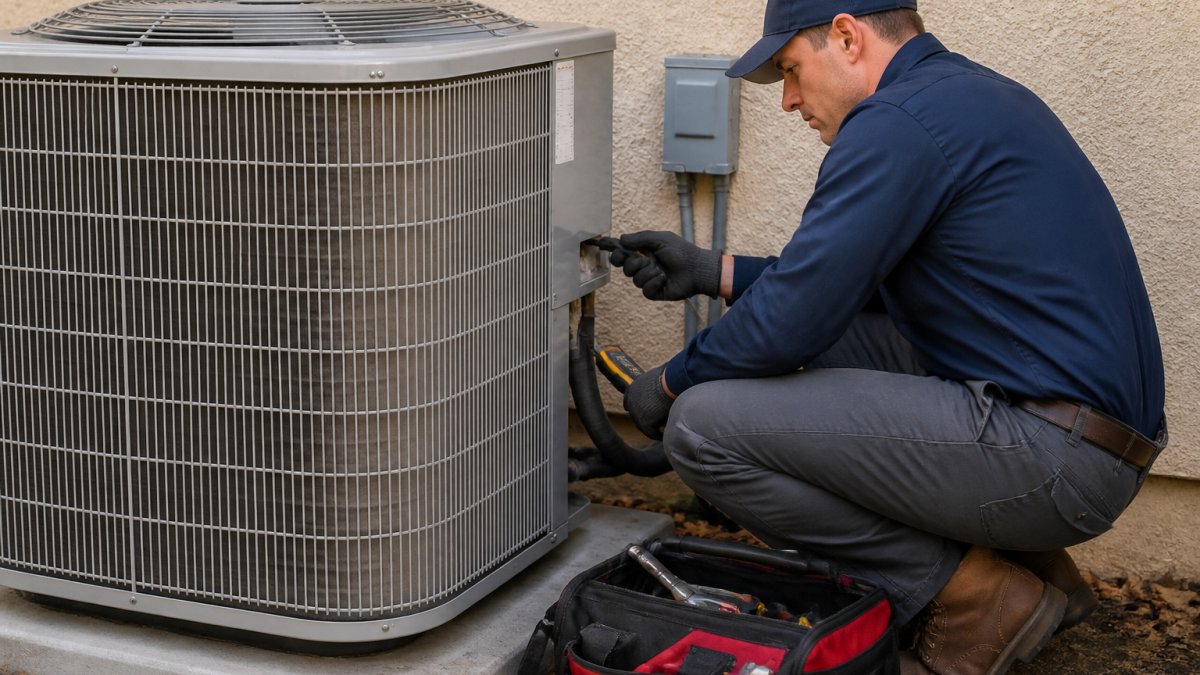
A professional tune-up goes deeper than a homeowner can. A technician checks refrigerant charge, tests electrical connections, cleans both coils, and measures how well the system moves air.
At Morgan Home Services, we've spent over 20 years servicing systems in Bushnell and Ocala, and a spring tune-up is the single best way to avoid a mid-summer breakdown. We back our work with comprehensive warranties and offer financing through Synchrony when a repair or replacement is needed.
A proper tune-up covers:
- Refrigerant charge and pressure readings
- Capacitor and contactor testing
- Coil cleaning, indoor and outdoor
- Blower motor and belt inspection
- Thermostat calibration
Schedule it in spring, before the first heat wave hits.
How to Reduce Humidity in a Florida Home Without Overcooling
To reduce humidity in a Florida home, run your AC fan on low and keep the system running in longer, gentler cycles. Humidity, not just heat, is what makes a Florida home feel sticky and forces you to crank the thermostat down.
Your AC removes moisture as it cools. When it short-cycles, it never runs long enough to pull that moisture out. That's why a house can feel clammy even at 75°F.
Ways to cut indoor humidity:
- Use bathroom and kitchen exhaust fans every time
- Fix plumbing leaks and dripping faucets
- Keep the fan setting on "auto," not "on," so it doesn't re-humidify the air
- Add a standalone dehumidifier in damp rooms
- Seal gaps that let humid outside air seep in
If humidity stays high no matter what you do, ask about a whole-home dehumidifier or a variable-speed system. Both run longer at lower power, which pulls out more moisture without overcooling.
When Repairing Your AC Costs More Than Replacing It
A common rule of thumb: if a repair costs more than a third of what a new system would cost, and your unit is 12 to 15 years old, replacement usually makes more sense. You're not throwing money at a system that's near the end of its life.
This is the question we hear most from property managers in the Ocala area: is it worth fixing a 15-year-old unit? Often, no. Older systems use older refrigerant and run less efficiently, so even a working unit keeps your bills high.
Signs it's time to replace:
- Repairs are getting more frequent
- The unit uses outdated refrigerant
- Rooms never feel evenly cool
- Energy bills keep climbing with no clear cause
- The compressor has already been replaced once
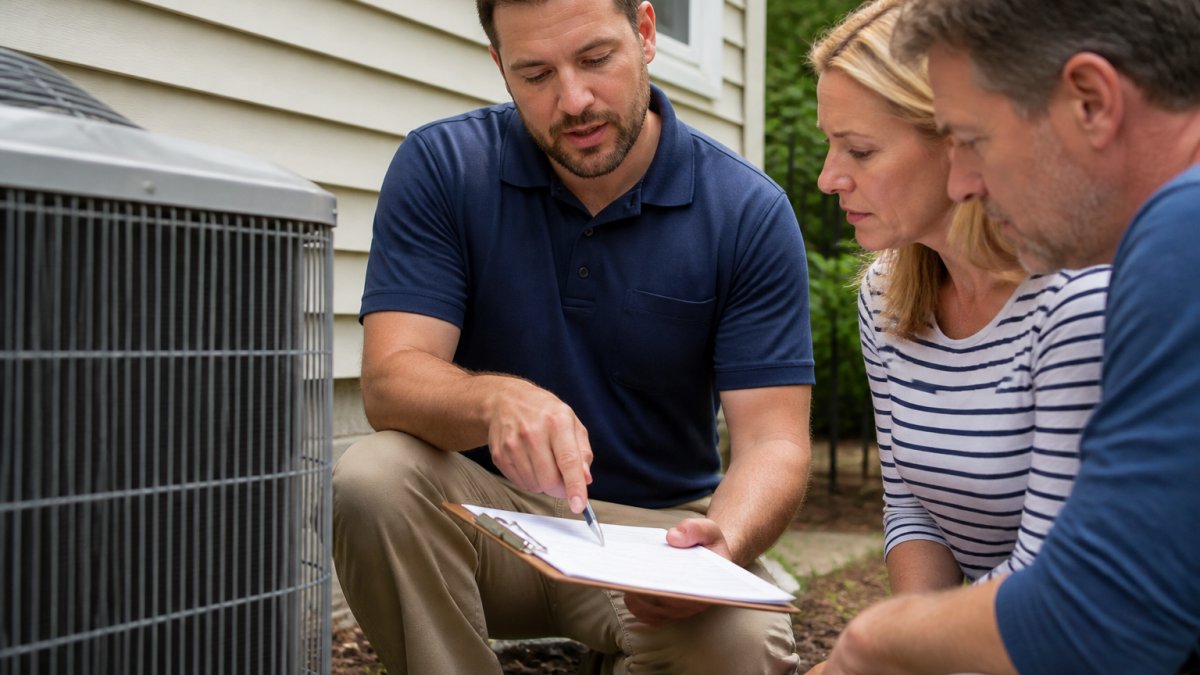
If you're facing a big repair, ask for an upfront estimate before any work starts. A trustworthy company will walk you through repair-versus-replace side by side, with real numbers, so you can decide with a clear head.
Free and Low-Cost Habits That Cut Cooling Costs
Free habits cut cooling costs faster than any gadget. Close blinds on sun-facing windows, run heat-producing appliances in the evening, and use ceiling fans to make 78°F feel like 74°F.
Ceiling fans cool people, not rooms, so turn them off when you leave. Each fan uses a tiny amount of power compared to the AC, and it lets you raise the thermostat a few degrees.
More habits that add up:
- Grill outside or use the microwave instead of the oven
- Air-dry dishes and laundry when you can
- Switch to LED bulbs, which throw off far less heat
- Seal gaps around doors and attic hatches with weatherstripping
- Plant shade trees or add awnings on west-facing windows
None of these cost much. Stacked together, they take real pressure off your system.
If you'd rather have a pro handle the heavy work, Morgan Home Services offers emergency HVAC service and long-term maintenance plans for homeowners and property managers in Bushnell and the surrounding areas. Our customers tell us the same thing again and again: we show up on time, we're honest about what's wrong, and we stand behind the work.
Central Florida summers are brutal on cooling systems, and a failing AC never picks a convenient time to quit. Whether you need a tune-up, an honest repair estimate, or a full system replacement, Morgan Home Services is ready to help. We bring over 20 years of experience, comprehensive warranties on our work, and flexible financing through Synchrony to every job. Reach out now and get your home cooling efficiently again.
ENERGY STAR cooling and thermostat guidance
U.S. Department of Energy tips on air conditioning
Frequently Asked Questions
What temperature should I set my AC to in Florida to save money?
Most Florida homes cool efficiently at 78°F when you are home and 85°F when you are away for more than four hours. Every degree you raise the thermostat above 72°F can trim roughly 3% off cooling costs, according to the U.S. Department of Energy. Pair the higher setting with ceiling fans running counterclockwise so the room still feels several degrees cooler than the thermostat reads. If someone in the home has health conditions affected by heat, keep the daytime setting lower and focus savings on overnight and away periods instead.
How often should I change my AC filter in Florida?
Change a standard 1-inch filter every 30 to 60 days during Florida's long cooling season, which runs roughly April through October. Homes with pets, smokers, or occupants with allergies should replace filters closer to every 30 days. Thicker 4- to 5-inch media filters can last three to six months, but check them monthly because Central Florida's pollen and dust load clogs filters faster than in drier climates. A clogged filter forces the blower to work harder, raising electric use and straining the compressor.
Does servicing my AC system really reduce electricity use?
Yes. A professional tune-up cleans the condenser coils, checks refrigerant charge, and verifies airflow, all of which affect how hard the system works. Dirty coils and low refrigerant are two of the most common reasons a Florida AC runs constantly without cooling the house. The U.S. Department of Energy notes that regular maintenance keeps equipment running at peak efficiency and can prevent costly breakdowns. Schedule service in spring before the summer rush so your system enters peak season in top condition.
Can ceiling fans and other habits lower my AC costs?
Ceiling fans cost pennies per hour to run and let you raise the thermostat about 4°F without feeling warmer, which adds up over a Florida summer. Close blinds on south- and west-facing windows during afternoon hours, run the dishwasher and dryer after 8 p.m., and seal gaps around doors and attic hatches. These habits won't replace a well-maintained system, but combined with proper thermostat settings and humidity control, they reduce the cooling load your AC has to handle each day.