 how-to
Get Upfront HVAC Repair Pricing: A Step-by-Step Guide
Table of Contents
- Why Upfront HVAC Repair Pricing Matters
- Understanding the HVAC Diagnostic Fee
- How to Request an HVAC Repair Estimate
- What Should Be Included in Your Written Estimate
- Questions to Ask an HVAC Contractor Before Approving Work
- How to Compare HVAC Repair Quotes Effectively
- Avoiding Common Pricing Surprises
- Financing and Warranty Options for HVAC Repairs
- Frequently Asked Questions
Last Updated: October 14, 2026
Why Upfront HVAC Repair Pricing Matters
When your HVAC system breaks down, uncertainty about cost makes many homeowners delay calling.
Transparent pricing means understanding what you're paying for. A written estimate breaks down labor, parts, and diagnostics so you can compare quotes and choose wisely.
At Morgan Home Services, we've built our process around a firm, detailed estimate before work begins.
Understanding the HVAC Diagnostic Fee
A diagnostic fee is what a technician charges to inspect your system, identify the problem, and provide a repair estimate. It's separate from the repair cost and the line item most homeowners forget to ask about.
What the Fee Typically Covers
A diagnostic visit usually bundles several things into one charge:
- Trip or dispatch fee: Covers drive time and fuel; some contractors fold this into the diagnostic fee, others bill it separately.
- On-site inspection: Visual check of indoor and outdoor units, thermostat, wiring, and refrigerant lines.
- Testing and measurement: Refrigerant pressure readings, temperature differentials, electrical continuity, capacitor and contactor testing, and amp draw on the compressor and blower.
Ask the dispatcher to break the fee into these components. A flat number with no explanation signals how transparent the rest of the estimate will be.
How Diagnostic Fees Are Credited
Most contractors credit the diagnostic fee toward the repair if you approve the work, but only if you ask. Three structures exist:
- Full credit: The entire diagnostic fee comes off the repair invoice if you proceed.
- Partial credit: A portion is credited; the rest is retained as a trip charge.
- No credit: The fee is a standalone charge regardless of whether you hire the contractor.
Get the credit policy in writing before the technician arrives. A text or email confirmation is enough. If the contractor will not put it in writing, treat that as a warning sign.
Why Contractors Charge for Diagnostics
Identifying an HVAC fault is skilled work. A technician must rule out a dozen possible causes, a failed capacitor, a stuck reversing valve, a clogged condensate drain, a low refrigerant charge, a bad control board, before recommending a repair.
The fee also filters out price shoppers. Contractors who waive it often build the cost into repair pricing, so the "free" estimate is rarely free.
What the Fee Does Not Cover
A diagnostic fee pays for the inspection and written findings. It does not cover:
- The repair itself
- Parts ordered or installed
- A second visit if you decline the first quote and call back later
- After-hours or weekend premiums, often added on top
Consumer Protections Around Diagnostic Fees
Rules vary by state. Many licensing boards require contractors to disclose fees before chargeable work and provide a written estimate on request, and some states cap certain trip charges. If unsure, check your state's contractor licensing board or attorney general's office.
A few practical protections to insist on:
- Written disclosure of the fee before the technician is dispatched
- Written findings after the inspection, not just a verbal summary
- Your approval in writing before any repair work begins
- A change-order process if the scope grows mid-repair
These are not unusual requests. Reputable contractors expect them.
How to Request an HVAC Repair Estimate
Requesting an estimate is straightforward, but the information you provide upfront affects the quote you receive.
What Information to Provide
When you contact an HVAC contractor, have these details ready:
- System type: Central air conditioner, heat pump, furnace, or oil heater?
- Age of the system: When was it installed?
- Current symptoms: Not cooling, not heating, making noise, leaking water, or running constantly?
- Last maintenance: When was it last serviced?
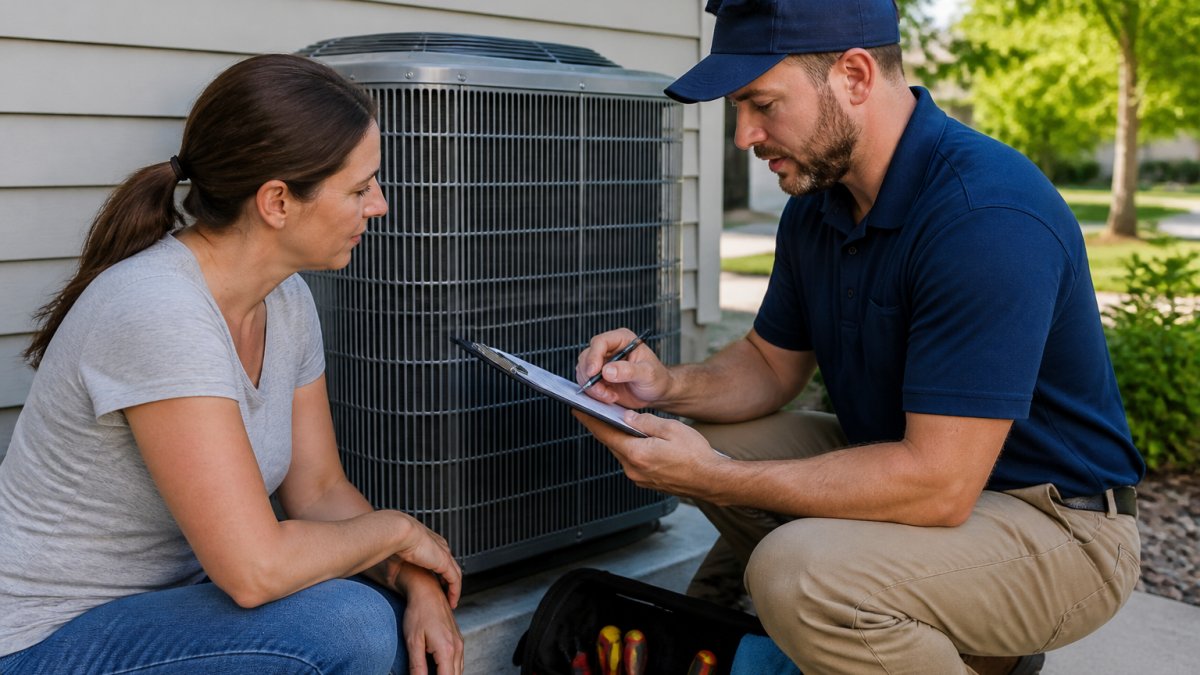
The more detail you provide, the better the contractor can prepare. Being upfront about symptoms helps the technician bring the right tools and parts, reducing time on-site.
What to Expect During the Service Call
When the technician arrives, expect a systematic inspection covering:
- Visual inspection of indoor and outdoor units
- Thermostat settings and operation
- Airflow and temperature differentials
- Refrigerant pressure
This usually takes 30 minutes to an hour. The technician will explain findings and outline options before giving you a written estimate. Ask questions, a good technician welcomes them.
What Should Be Included in Your Written Estimate
A written estimate is your protection, and it determines whether a quoted price is binding, an approximation, or a starting point for negotiation. Knowing the difference before you sign avoids surprise bills.
The Step-by-Step Process for Getting a Firm Quote
Getting a firm, itemized repair quote follows a predictable sequence. Skipping a step is how homeowners end up with vague numbers.
- Describe the symptoms when you book. Tell the dispatcher what the system is doing, not cooling, short-cycling, tripping the breaker, leaking, grinding. This determines what the technician brings and how long the visit takes.
- Confirm the diagnostic fee and credit policy in writing. Ask for the amount, whether it's credited toward repair, and whether a trip charge applies separately.
- Let the technician complete the diagnosis. Don't accept a repair price before the inspection is finished. A phone quote before diagnosis is an estimate, not a firm price.
- Request the written estimate before any work begins. Ask for it by email or printed on the invoice. Verbal quotes are not enforceable in most disputes.
- Review the itemization line by line. Compare parts, labor, diagnostic credit, warranty, and total.
- Ask what is not included. Permits, disposal fees, refrigerant, and after-hours premiums are common exclusions.
- Approve in writing. A signature, email reply, or text confirmation creates a record of what you authorized.
- Get a change order for any scope change. If the technician finds additional problems, a new written estimate should be issued before that work proceeds.
When a Quote Becomes Binding
A quote becomes binding when both parties agree on scope, price, and terms in writing.
If the contractor wants to exceed the agreed price, they need your approval, typically via a change order. Many notify the homeowner before the bill exceeds the estimate by more than 10 percent, though this is a business practice, not a legal requirement.
What Can and Cannot Be Priced Before Diagnosis
Some repairs can be quoted over the phone; many cannot. Knowing the difference keeps you from accepting a number that won't hold.
Often quotable before an on-site visit:
- Thermostat replacement (standard models)
- Air filter replacement
- Standard capacitor or contactor replacement on a common system
- Routine tune-up or maintenance visit
Usually requires on-site diagnosis before a firm price:
- Compressor replacement (refrigerant recovery, line flushing, and electrical testing all affect labor)
- Refrigerant leak repair (leak location drives labor)
- Blower motor or control board replacement (part availability varies)
- Ductwork repair (access and extent of damage unknown until inspected)
Itemized Estimates: What Each Line Should Show
A useful estimate separates costs so you can compare it against another contractor's quote on equal terms.
- Diagnostic fee: Amount charged, and whether it's credited toward the repair
- Labor: Hourly rate or flat fee, plus estimated hours
- Parts: Each component listed separately with part number, description, and price
- Refrigerant: Type (R-410A, R-32, or R-454B), quantity in pounds, and price per pound
If any line says "miscellaneous" or "shop supplies" with no detail, ask for a breakdown, that's where padding hides.
Red Flags on a Written Estimate
- Vague scope ("system repair" instead of "replace 3-ton condenser fan motor, part #XYZ")
- No part numbers
- Labor quoted as a range with no cap
- No warranty terms stated
Change Orders and Written Approval
If the technician discovers additional problems after work begins, the correct process is a change order: a short written document describing the new scope, added cost, and revised total, which you approve before the extra work proceeds. A contractor who keeps working and surprises you at the invoice has skipped this step, and you can dispute the unauthorized portion.
State contractor licensing board directory
Questions to Ask an HVAC Contractor Before Approving Work
Before signing off on any repair, ask these questions:
- Is the diagnostic fee credited toward the repair? Get the answer in writing.
- What's covered under warranty? Ask specifically about parts and labor, and for how long.
- What happens if the repair doesn't fix the problem? Does the contractor stand behind the work?
- Do you offer financing? If cost is a concern, ask about payment plans.
These questions separate transparent contractors from the rest. One who answers clearly and confidently is one you can trust.
How to Compare HVAC Repair Quotes Effectively
Getting multiple estimates is standard practice, but comparing them requires care because not all estimates are created equal.
Look at the parts used.
Compare labor costs carefully.
Don't automatically choose the cheapest option. The lowest quote often reflects lower quality, less experienced technicians, or shorter warranties.
Morgan Home Services provides detailed written estimates that break down every cost so you can compare fairly.
Avoiding Common Pricing Surprises
Surprises happen when expectations don't match reality. Here's how to avoid them.
Surprise 3: Parts markup. Some contractors mark up parts significantly.
Surprise 4: Scope creep. The repair takes longer than estimated due to complications.
Surprise 5: Warranty exclusions. You think you're covered, but the fine print excludes your issue.
Surprise 6: Emergency pricing. After-hours, weekend, and peak-season repairs cost more.
Financing and Warranty Options for HVAC Repairs
If the repair cost is substantial, financing can make it manageable.
Financing typically works through a third-party lender that covers the repair cost, and you repay monthly.
Morgan Home Services offers flexible financing through Synchrony, giving homeowners choices that fit their budget.
Warranties protect your investment.
Understand what voids a warranty: improper maintenance, external damage, or non-OEM parts.
Frequently Asked Questions
Do most HVAC companies charge a diagnostic fee?
Yes, many HVAC contractors charge a diagnostic fee to evaluate your system and identify the problem. This fee typically covers the technician's time and expertise to inspect your equipment, run tests, and determine what repairs are needed. Some companies waive this fee if you proceed with repairs through them. Always ask upfront whether a diagnostic fee applies and whether it's credited toward your repair bill if you move forward with service.
What should an HVAC repair estimate include?
A complete HVAC repair estimate should list all parts needed with individual costs, labor charges broken down by hour or task, the total repair cost, warranty details on both parts and labor, timeline for completion, and payment terms. It should also specify what work is included and any items that are not covered. A written, itemized estimate protects you by documenting exactly what you're agreeing to pay before the technician begins work.
How do I compare HVAC repair quotes from different contractors?
Request written estimates from at least two or three contractors. Compare the same repair scope across all quotes, not just the total price. Look at parts costs, labor rates, warranty coverage, and the contractor's experience. Be cautious if one quote is significantly lower than others, as it may indicate cut corners or missing services. Verify that each contractor is licensed, insured, and has positive customer reviews before making your final decision.
Can I get an HVAC repair estimate before a technician visits?
Most HVAC contractors cannot provide an accurate estimate without diagnosing the problem first. However, you can request a ballpark estimate based on your system type and the symptoms you describe. A technician must visit to inspect your equipment, identify the exact issue, and provide a firm written estimate. Some companies offer phone consultations to narrow down possibilities, but a diagnosis fee typically applies when they arrive to evaluate your system in person.
Getting upfront HVAC repair pricing gives you confidence and control. You'll know exactly what the repair costs before work begins, and you can compare options without pressure. Morgan Home Services makes this process straightforward with detailed estimates and transparent pricing. When your system needs attention, reach out to us for an honest assessment and a firm quote you can trust.