 listicle
HVAC Energy Efficiency Tips 2026: Save on Cooling Costs
Table of Contents
- Why HVAC Energy Efficiency Matters in 2026
- Best Thermostat Settings for Energy Savings
- How Often to Change Your HVAC Air Filter
- HVAC Maintenance Tips for Peak Efficiency
- HVAC Energy-Saving Upgrades Worth Considering
- Room-by-Room Efficiency Checklist
- Understanding SEER2 and HSPF2 Ratings
- Rebates, Incentives, and Financing Options
- Frequently Asked Questions
Last Updated: October 9, 2026
Why HVAC Energy Efficiency Matters in 2026
Your HVAC system is usually the single largest energy user in your home, making it the biggest opportunity to cut utility bills.
The stakes are higher this year: new federal efficiency standards took effect in 2023, and refrigerants are changing again in 2025 and 2026.
HVAC energy efficiency measures how much heating and cooling output a system delivers per unit of electricity consumed.
Best Thermostat Settings for Energy Savings
The best thermostat settings for energy savings are 78°F while you are home and awake, and 82°F or higher when you are away or asleep. The U.S. Department of Energy recommends these setpoints for summer cooling, and each degree you raise the setting cuts cooling costs by roughly 3% over 24 hours.
Thermostat settings are the easiest lever you have. No tools, no technician, no cost.
Here is how we would set a schedule for a typical Central Florida home:
- 6:00 a.m. to 9:00 a.m.: 78°F while getting ready for work
- 9:00 a.m. to 5:00 p.m.: 82°F while the house is empty
- 5:00 p.m. to 10:00 p.m.: 78°F while everyone is home
Smart vs. Programmable Thermostats
A programmable thermostat follows a fixed schedule you set once. A smart thermostat learns your patterns, adjusts automatically, and can be controlled from your phone. Smart models also account for humidity and outdoor temperature, which matters when summer heat indexes climb above 100°F.
A programmable thermostat costs less upfront and works for predictable schedules. A smart thermostat pays off for variable schedules or rentals where you cannot rely on tenants to adjust settings manually.
How Often to Change Your HVAC Air Filter
Change your HVAC air filter every 30 to 90 days, depending on filter type, dust levels, and pets. In Central Florida, where systems run nearly year-round, check monthly and replace at least every 60 days during peak cooling season.
A clogged air filter is the most common cause of reduced airflow we see on service calls. When airflow drops, the system works harder, energy consumption rises, and the evaporator coil can freeze, and repeated freeze-thaw cycles shorten compressor life.
Filter Types and MERV Ratings
MERV stands for Minimum Efficiency Reporting Value, a 1-to-16 rating of how well a filter captures particles. Higher MERV means better filtration but more airflow resistance.
| Filter Type | MERV Rating | Change Frequency | Best For |
|---|---|---|---|
| Fiberglass | 1-4 | 30 days | Basic dust protection |
| Pleated | 8-11 | 60-90 days | Most homes, pets |
| High-efficiency | 13-16 | 60-90 days | Allergies, asthma |
A MERV 13 filter captures far more pollen and fine particles than a fiberglass panel, but if your system was designed for MERV 8, upgrading can restrict airflow and hurt efficiency. Check your manual or ask your technician first.
HVAC Maintenance Tips for Peak Efficiency
Schedule a professional tune-up once a year, ideally in spring before cooling season. Between visits, the tasks below keep your system near its rated efficiency, many are simple enough to handle yourself.
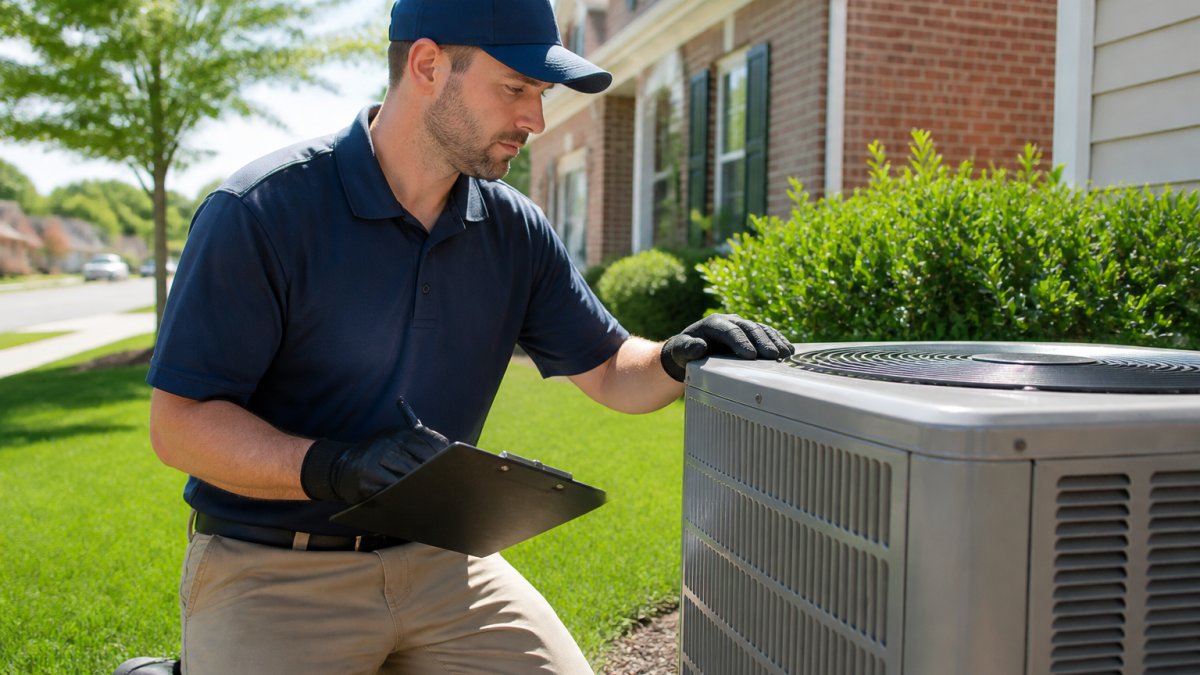
What you can do yourself:
- Replace the air filter monthly during peak season
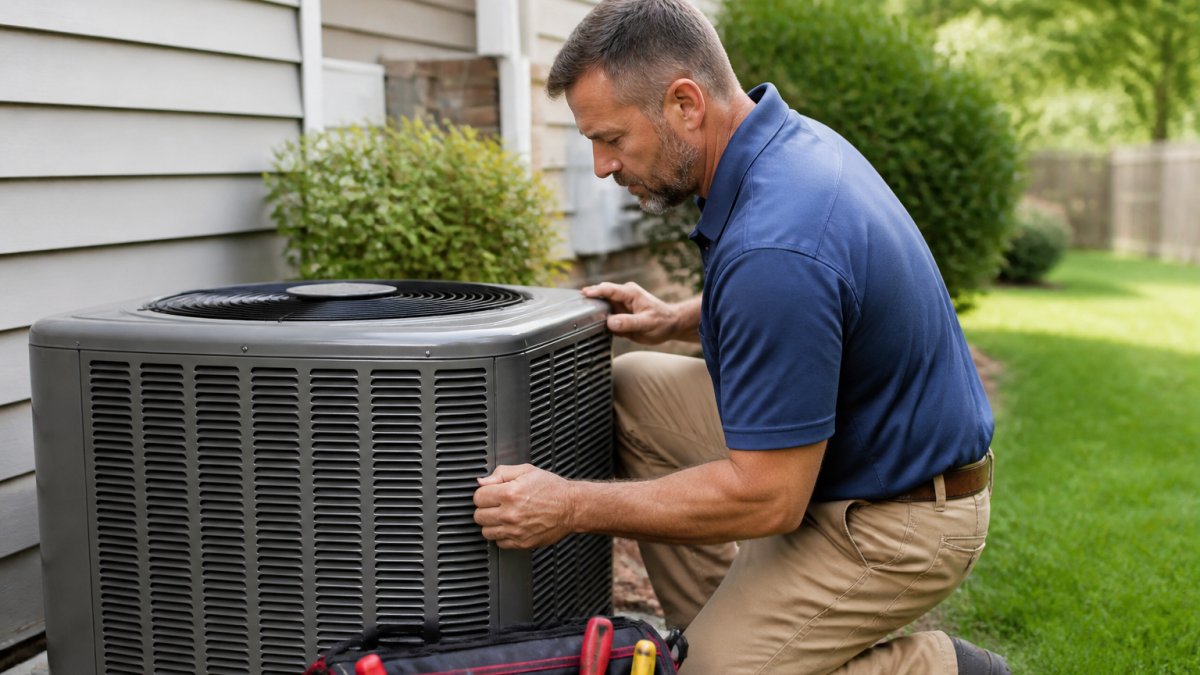
- Clear debris, leaves, and grass clippings from around the outdoor condenser unit
- Straighten bent condenser fins with a fin comb
What requires a licensed technician:
- Checking refrigerant charge and pressures
- Cleaning the evaporator coil
- Testing capacitors, contactors, and electrical connections
HVAC Energy-Saving Upgrades Worth Considering
Upgrades deliver the biggest efficiency gains, but also the most wasted money when homeowners buy the wrong thing first.
Here is how the common upgrades compare on cost, likely savings, and payback. Ranges reflect typical residential projects; your numbers depend on home size, age, climate zone, and current equipment.
| Upgrade | Typical Installed Cost | Likely Annual Savings | Typical Payback | Best When |
|---|---|---|---|---|
| Air sealing (caulk, weatherstrip, foam) | $200-$800 | 5-15% of heating/cooling | Under 2 years | Any home, especially older ones |
| Attic insulation upgrade | $1,500-$4,000 | 10-20% of heating/cooling | 3-7 years | Under-insulated attics, hot climates |
| Duct sealing | $1,000-$3,000 | 10-25% of heating/cooling | 2-5 years | Leaky ducts in unconditioned space |
| Smart thermostat | $150-$400 | 8-12% of heating/cooling | 1-3 years | Variable schedules, rentals |
| Ceiling fans | $100-$400 per room | Lets you raise setpoint 3-4°F | Under 2 years | Occupied rooms in summer |
| Window treatments / films | $50-$1,500 | 5-15% of cooling | 2-6 years | West/south-facing glass |
| Heat pump replacement | $6,000-$18,000 | 20-40% vs. old system | 6-12 years | Systems 12+ years old |
| Variable-speed system | $8,000-$20,000 | 10-25% vs. single-stage | 7-12 years | Humidity control, comfort priority |
These ranges are directional, not promises. Envelope and duct work deliver the fastest payback; equipment replacement delivers the largest absolute savings but the longest payback.
Heat Pumps and Variable-Speed Systems
Heat pumps move heat rather than generating it, delivering more heating per unit of electricity than a furnace or electric resistance heat. In mild-winter climates, a heat pump handles nearly all your heating; in colder regions, pair a cold-climate heat pump with a backup source.
A variable-speed system modulates its compressor and blower instead of cycling on and off at full power, delivering steadier temperatures, lower humidity, and less energy consumption.
How to Sequence Upgrades for the Best Payback
- Air seal and insulate first. Every dollar spent here reduces the load the equipment has to meet.
- Seal and test the ducts. Duct leakage in unconditioned space is one of the most common hidden losses.
- Add controls. A smart thermostat is cheap and compounds the savings from steps 1 and 2.
- Right-size and replace equipment last. A load calculation tells you what size you actually need.
Rebates and Financing Change the Math
Federal tax credits, utility rebates, and manufacturer promotions can offset a meaningful share of an equipment upgrade. The Inflation Reduction Act created federal tax credits for qualifying heat pumps and efficiency improvements, and many utilities layer rebates on top. Rules and amounts change, so check official sources before you budget. Financing spreads the remaining cost, which matters most on larger equipment where payback is longest.
Room-by-Room Efficiency Checklist
Most efficiency guides focus on equipment, but room-by-room details matter just as much, a perfectly tuned system cannot overcome a house that fights it. Here is how we would walk a home, room by room.
- Living room: Close blinds on west- and south-facing windows during afternoon hours. Keep the thermostat away from lamps, TVs, and direct sun so it reads temperature accurately.
- Kitchen: Run the exhaust fan when cooking. It removes heat and moisture that your AC would otherwise have to handle.
- Bedrooms: Set ceiling fans to run counterclockwise in summer. Close doors to unused rooms so you are not cooling space nobody uses.
Understanding SEER2 and HSPF2 Ratings
SEER2 is the updated Seasonal Energy Efficiency Ratio measuring cooling efficiency, and HSPF2 measures heating efficiency for heat pumps. Higher numbers mean better efficiency. These ratings replaced SEER and HSPF in 2023 to reflect real-world duct and static pressure conditions more accurately.
What the 2026 Standards Actually Require
The current federal minimums for residential equipment took effect in 2023 and are organized by region. These are manufacturing and sale standards for new equipment, not a mandate to replace what you own, an existing system that met the older SEER standard can keep running.
Minimums vary by system type and region:
- Split-system air conditioners: minimum SEER2 varies by region, with higher minimums in hotter regions.
- Heat pumps: minimum SEER2 and HSPF2 apply nationally, with regional variation.
- Packaged units: separate minimums apply.
Because the numbers differ by region and equipment type, ask your contractor for the equipment's rated SEER2 and HSPF2 and confirm it meets your region's minimum. Do not assume a model number tells you.
How to Compare Compliant Equipment
Once a unit meets the minimum, the rating becomes a comparison tool, not a pass/fail. Two compliant systems can differ substantially in operating cost. Compare them on:
- SEER2 for cooling, higher means less electricity per unit of cooling.
- HSPF2 for heating, higher means less electricity per unit of heating.
- Capacity match to your load calculation, the right size beats the highest rating.
- Duct compatibility, a high-SEER2 unit on undersized ducts can underperform a mid-range unit on a properly designed system.
Why the Rating Is Not the Whole Story
The rating tells you how equipment performs under standardized test conditions, not in your home, because ductwork, insulation, and system sizing all affect real efficiency.
That is why a load calculation matters: it determines how much heating and cooling your home actually needs, based on square footage, window area, insulation, and orientation, and proper system sizing follows from that number.
Refrigerants and the 2026 Transition
The refrigerant used in new equipment is also changing. The industry is transitioning to lower-global-warming-potential refrigerants, and new systems sold in 2025 and 2026 may use a different refrigerant than your current unit. This matters for two reasons:
- Service: Your existing system's refrigerant is not interchangeable with the new one. Ask your contractor which refrigerant your system uses and whether it will remain available.
- Replacement timing: If your system uses an older refrigerant and needs a major repair, the cost of that repair can approach the cost of a new system. That is a legitimate reason to consider replacement.
Rebates, Incentives, and Financing Options
Financing is the other half of the equation. Morgan Home Services offers financing through Synchrony, letting you spread the cost of a replacement system over time instead of paying upfront. We also stand behind our work with comprehensive warranties, so you know what is covered before work starts.
If you are a military veteran or first responder, ask about our discount program when you call. We will walk you through what qualifies and what you save compared to our standard pricing.
An aging system, rising utility bills, and a house that never quite feels comfortable are all signs your HVAC setup is working harder than it should. With over 20 years serving homeowners and property managers in Bushnell, Ocala, and the surrounding areas, we know what Central Florida systems need to run efficiently.
Frequently Asked Questions
Are new HVAC systems more energy efficient?
Yes. New systems must meet SEER2 and HSPF2 standards, which are more stringent than previous ratings. A new high-efficiency unit can use significantly less energy than an older system, especially if it is 10 to 15 years old. For example, replacing a SEER 10 unit with a SEER2 15 unit can reduce cooling energy use by about a third. Pairing a new system with proper sizing and duct sealing maximizes savings.
How often should HVAC filters be changed to improve efficiency?
Change standard 1-inch filters every 30 to 60 days. If you have pets, allergies, or run the system constantly, check monthly. Thicker 4-inch filters may last 3 to 6 months. A clogged filter restricts airflow, forcing the system to work harder and raising energy consumption. Set a reminder or use a smart thermostat that tracks runtime to know when to replace it.
What thermostat settings help reduce HVAC energy use?
Set your thermostat to 78°F when home and 85°F when away during cooling season. In winter, 68°F while awake and lower while sleeping or away. A smart thermostat can automate these adjustments. Each degree you raise the setpoint in summer can save 3 to 5% on cooling costs. Avoid drastic setbacks that force the system to run constantly to recover.
Does regular HVAC maintenance lower energy bills?
Yes. Annual tune-ups keep coils clean, check refrigerant levels, and ensure proper airflow. A well-maintained system uses less energy than a neglected one. Tasks like cleaning condenser coils and tightening electrical connections improve efficiency and prevent costly breakdowns. Schedule professional maintenance each spring before peak cooling season to keep your system running at peak performance.